Business Administration Education Guide

Tuesday, July 31, 2007

Kids take on lunch lady -- and win

LAS VEGAS, Nevada (AP) -- Even someone who believes you can fight city hall might think twice before taking on the lunch lady. But some second-graders who raised their voices over reheated frozen green beans are being rewarded with tastier vegetables.
art.lunch.gi.jpg

Pupils are beginning to speak up about the quality of food at school cafeterias.

The menu at William V. Wright Elementary School is getting a makeover after Constantine Christopulos' class went on a poignantly polite letter-writing campaign aiming to see less of that particular vegetable in the cafeteria.

"A little boy said, `Anything, anything, I'll even eat broccoli,"' said Connie Duits, the lunch lady. "So that one touched my heart."

The children were careful to offer praise as they expressed their concerns.

"Dear Mrs. Duits, The food is so yummy and yummy. But there are one problem. It is the green beans," wrote Zhong Lei.

"We love the rest but we hate the green beans," wrote Viviann Palacios.

The Las Vegas students undertook the exercise in mini-democracy after the class read a book called "Frindle," in which a boy contemplates organizing a boycott of the cafeteria.

"I asked the kids, 'Is that a respectful way of doing it?"' Christopulos said. "And they said, 'Oh, not at all."'

As a result of the students' campaign, the food service department of the Clark County School District sent staff to the school to see what alternatives they preferred.

With a handful of reporters watching, two dozen students sat down Monday to a veritable salad bar of cooked, frozen and canned vegetables, from baby corn to cherry tomatoes, and filled out a survey.

Because of cost restrictions, the children's only real choices were between canned and frozen green beans, corn, cooked or raw carrots and cooked or cold peas.

Corn and carrots were popular; cooked peas, not so much.

"The cooked peas, it's warm and all, but inside of it, it's all soft and stuff and I don't like it," said MacKenzie Rangel.

Brenden Lucas said he liked the raw carrots, "Because it's hard and crunchy."

Some children got downright prolific when asked to write what other foods they would like for lunch or breakfast. Viviann requested "stake" and lobster, while Logan Strong wanted "chocolate filled panda cookies" and "chicken cordon blue."

While not all the requests would be accepted -- and green beans would still occasionally be served -- district supervisor Sue Hoggan said the survey will help district dietitians "tweak" the menu.

"They were so excited to get a response back," Christopulos said. "I taught them the pen is mightier than the sword, and hopefully they remember that forever."

Labels: , , , , ,

Thursday, April 12, 2007

Elementary Rat Race


It really isn't easy being a kid growing up in these times. Yes, the 30 + age sect may have had to wait a whole week for Saturday morning cartoons, but at least we didn't have to worry about walking through metal detectors. Plus, it seems as if home work has become more important than socializing. I know, teachers, parents and the general population may probably disagree with me. However, I question if the push for higher quality elementary educational pressure is excluding opportunities for socializing which is a primary necessity of growing up.


What should be more important then constantly pushing for the best grades to be accepted into the best college is to try to guide the child both academically and socially.


An enthusiastically learning child will easily achieve educational goals if she/he is interested. They do not need to be put under pressure to study and do school work. Rather what is better is to focus on ensuring that they are developing a solid foundation socially. Even though some children will be able to achieve Honor Roll recognized grades, not being able to communicate with their surrounding environment, peers and co students will be more of a detriment for the future possibilities of success.


On the other hand, some children, even though they will give their academic best may not be able to achieve the expected educational goals, but will excel socially. If this is the case pushing them beyond a reasonable level will not help and will probably be more damaging for their future career possibilities.


Is all the extra home work from elementary to middle school truly necessary? Will the mounds of home work help the student maximize the best possible chance of obtaining a career where the child will not only excel in, but will also enjoy and can provide financially for themselves as well as a family?


Colleges look at the grades from the last three to five years of education, so the grades before this period are not college acceptance important.


What is important is that the child develops into a stable and responsible member of the community based on his or her own potential, personality and functionality. This theory falls right back into the “not all children will learn the same way” basket. I don’t think that a pressured elementary education that gives a lot of homework is necessary to breed an academically intelligence teenager ready to take on corporate America after four to six additional college years. While math skills may be one of the best measures of a child’s thinking skills, a social function is one of the best measures of a child’s convivial development.


In a 2006 survey by Scholastic Inc., 40 percent of kids between the ages of five and eight read every day. At fourth grade, though, that rate declined to 29 percent. Educational testing may be contributing to the decline. In an effort to meet government educational requirements such as the No Child Left Behind act, kids are being taught through "teach to the test," methods. The more instructional methods are replacing social studies and science books in the early elementary years.


Kids as young as 6 are being tested every 10 to 20 days or so just to ensure they're making sufficient progress. Than there's educational videos, educational play time and at home it's home work and even

tutoring, to help give them an edge towards a quality college education. Do we really need to embrace this new work ethic in kids so young? Is getting their first taste of failure before they learn to tie their shoes more important than developing good social skills?


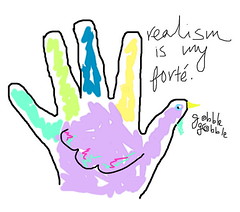
More and more, elementary education has transformed from See Jane Run to SAT prep exams. In my elementary first grade, I learned to read and I learned basic writing structure. Now, reading lessons start in kindergarten and kids who don't easily get the swing of words and writing by the middle of the first grade are made to feel as though something is wrong with them, as if they are not smart enough to be in first grade. In some schools, music, art and even social studies are being replaced by writing exercises, spelling tests and math problems...and to think that at that age, I was so proud of my multi colored hand turkey.


Leaving The Rat Race


Labels: , , , , , ,